Queer Places:
Heath End House, Spaniards Rd, London NW3 7JE, UK
1 South Square, London NW11 7AL, UK
Toynbee Hall, 28 Commercial St, Spitalfields, London E1 6LS
Saint Helen's Churchyard, Hangleton Way, Brighton and Hove, Hove BN3 8ER, United Kingdom
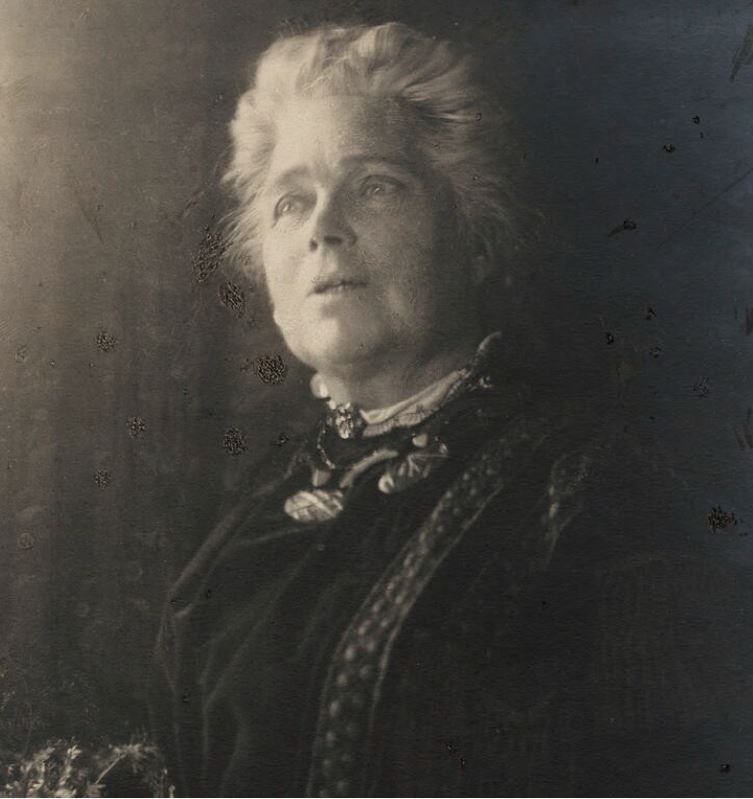 Dame Henrietta Octavia Weston Barnett (née Rowland, May 4, 1851 – June 10, 1936) was a pioneering English social reformer, philanthropist, and author. Best known for
co-founding Toynbee Hall and establishing Hampstead Garden Suburb, she dedicated her life to improving living conditions, housing, and educational opportunities for London's
working-class communities.
Dame Henrietta Octavia Weston Barnett (née Rowland, May 4, 1851 – June 10, 1936) was a pioneering English social reformer, philanthropist, and author. Best known for
co-founding Toynbee Hall and establishing Hampstead Garden Suburb, she dedicated her life to improving living conditions, housing, and educational opportunities for London's
working-class communities.
Born into a wealthy family in Clapham, London, Henrietta lost her mother shortly after birth and was raised primarily by her father. At age 16, she attended a Dover
boarding school run by the Haddon sisters, whose commitment to social altruism deeply influenced her.
In 1870, she began working with Octavia Hill, a prominent housing reformer. Through Hill, Henrietta was introduced to Samuel
Augustus Barnett, an Anglican curate. The pair married in 1873 and moved to St Jude’s parish in Whitechapel—one of the poorest, most overcrowded slums in London's East
End.
Together with her husband, she co-founded the world's first university settlement house, Toynbee Hall (1884). Toynbee Hall brought university students and graduates
(from Oxford and Cambridge) to live and work alongside working-class East End residents, fostering cross-class understanding and community education.
She founded the Children's Country Holiday Fund (1877), providing poor urban children with rural holidays, and co-founded the Metropolitan Association for Befriending
Young Servants (1876).
Horrified by slum conditions, she spearheaded the creation of a planned, green community in North London, the Hampstead Garden Suburb (1907), where people of all social
classes and income levels could live together in clean, healthy surroundings.
A staunch advocate for women's suffrage and education, she founded The Henrietta Barnett School in 1911 to give girls access to rigorous academic standards.
In 1924, she was appointed Dame Commander of the Order of the British Empire (DBE) for her contributions to social reform. She died at her home in Hampstead on June 10,
1936, at the age of 85.
While Henrietta Barnett was in a conventional heterosexual marriage with Samuel Barnett, her life and work intersect with queer history, homosocial reform movements, and
Victorian gender subversion:
Historians—most notably Seth Koven in Slumming: Sexual and Social Politics in Victorian London—have documented how settlement houses like Toynbee Hall provided spaces for
alternative expressions of gender, desire, and homosocial intimacy.
Toynbee Hall created a homosocial environment where university men lived, worked, and formed deep emotional bonds with one another and working-class men.
Figures in the settlement circle, such as designer C.R. Ashbee, were openly drawn to same-sex comradeship inspired by
Walt Whitman and Edward Carpenter. Henrietta was a central authority figure who
managed and shaped these settlement dynamics.
Henrietta worked closely within networks of female reformers who lived in long-term, same-sex partnerships (often referred to historically as "Boston marriages" or
romantic friendships):
Her primary mentor, Octavia Hill, spent decades living in a devoted partnership with Harriot Yorke, a relationship widely
discussed within UK queer heritage and lesbian history.
Henrietta frequently advocated for independent women to remain unmarried if they wished, arguing that women did not need to marry men to find purpose or power, and urging
them to channel their energies into social and public reform.
Contemporaries frequently noted Henrietta’s resistance to rigid Victorian gender norms. Residents at Toynbee Hall described her as having an "irrepressible will...
suggestive of the stronger sex" and a "maverick, dominating" demeanor. Her public leadership and refusal to be overshadowed by her husband challenged the heteronormative
standards of 19th-century marriage.
The Henrietta Barnett School, which she established in North London, continues her legacy of female empowerment and has been recognized in educational reviews for its
active student-led LGBTQ+ forums and inclusive environment.
Dame Henrietta Barnett is buried alongside her husband, Canon Samuel Augustus Barnett, in the churchyard of St Helen’s Church in Hangleton, East Sussex, England.
Additionally, a memorial tablet dedicated to both Henrietta and Samuel Barnett is located in the South Choir Aisle of Westminster Abbey in London.
References:
Other references:
- Barnett, Henrietta Octavia Rowland. Canon Barnett: His Life, Work, and Friends. London: John Murray, 1918.
- Barnett, Samuel Augustus, and Henrietta O. Barnett. Practicable Socialism: Essays on Social Reform. London: Longmans, Green, & Co., 1888.
- Koven, Seth. Slumming: Sexual and Social Politics in Victorian London. Princeton University Press, 2004. ISBN: 978-0691115603.
- Koven, Seth. "Henrietta Barnett: The (Auto)biography of a Late-Victorian Marriage." In After the Victorians: Private Lives and Public Cause, edited by Susan Pedersen and Peter Mandler. Routledge, 1993.
- Creighton, Louise. Life and Letters of Thomas Howard, Earl of Arundel. / Social Reformers: Works on the Settlement Movement.
- Darley, Gillian. Octavia Hill: A Life. Constable, 1990.
- Glinert, Ed. East End Chronicles. Penguin Books, 2005.
- Toynbee Hall Archives (London Metropolitan Archives / Toynbee Hall Collection)
- London School of Economics (LSE) Library / Archives
Support this project
This website is a passion project researched, developed, and funded entirely by me. If you find the content valuable and would like to help support the ongoing research and hosting costs, any contribution is deeply appreciated.
Thank you for keeping this independent resource alive!
My books on Amazon: Elisa Rolle's books
BACK TO HOME PAGE


